Healthcare Facility portal
About
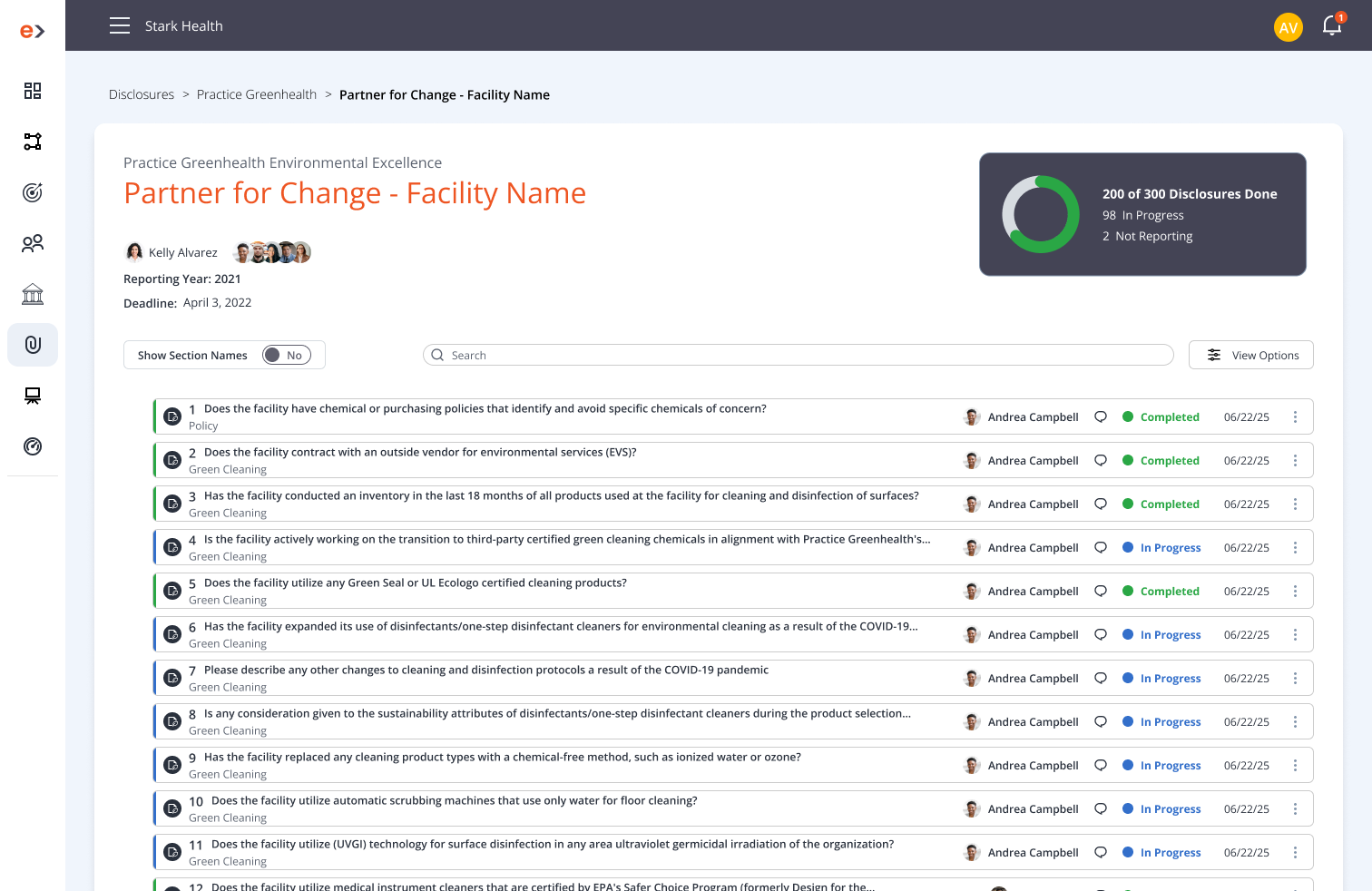
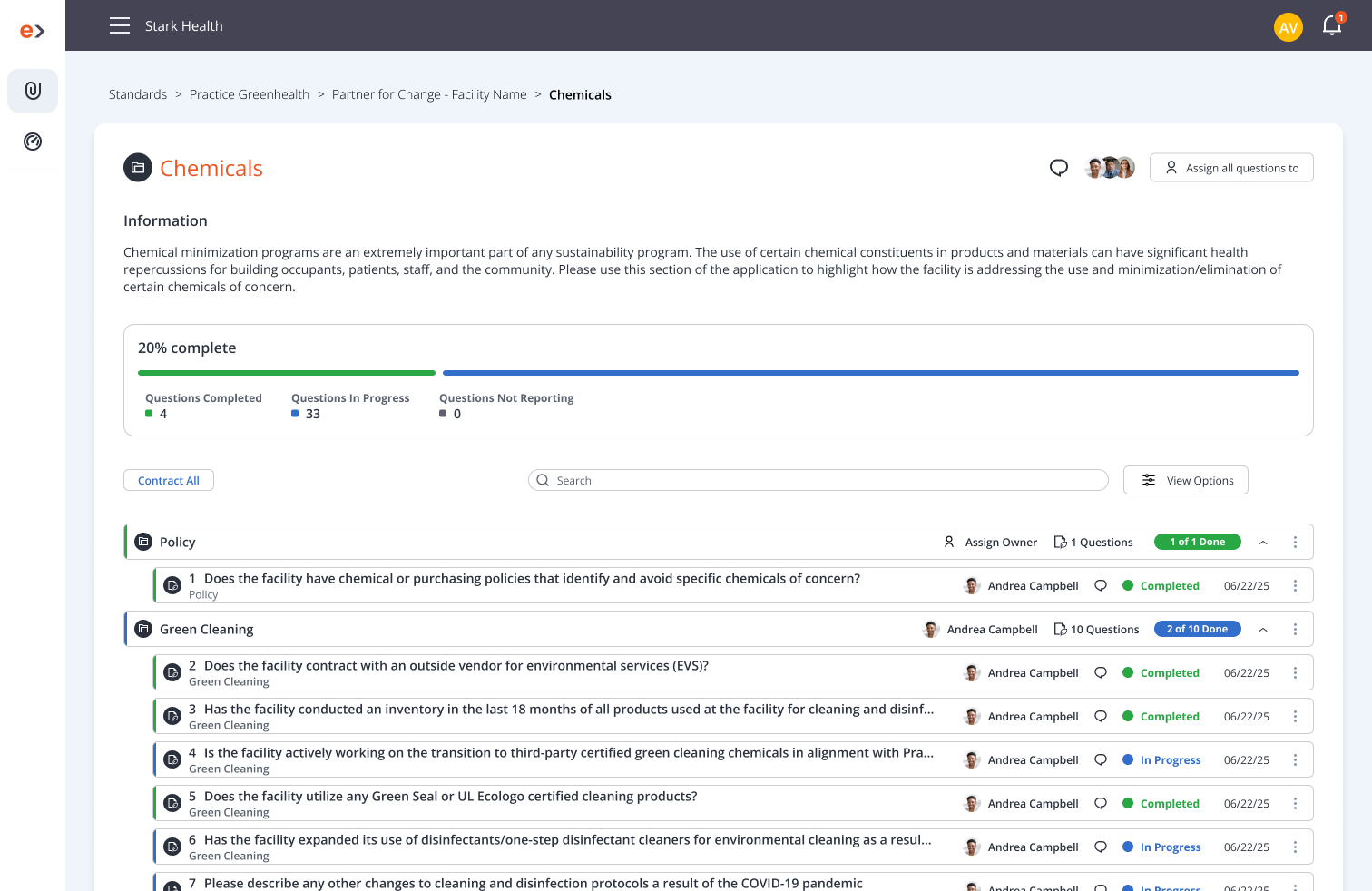
Facility management portal with an emphasis on compliance and disclosures.
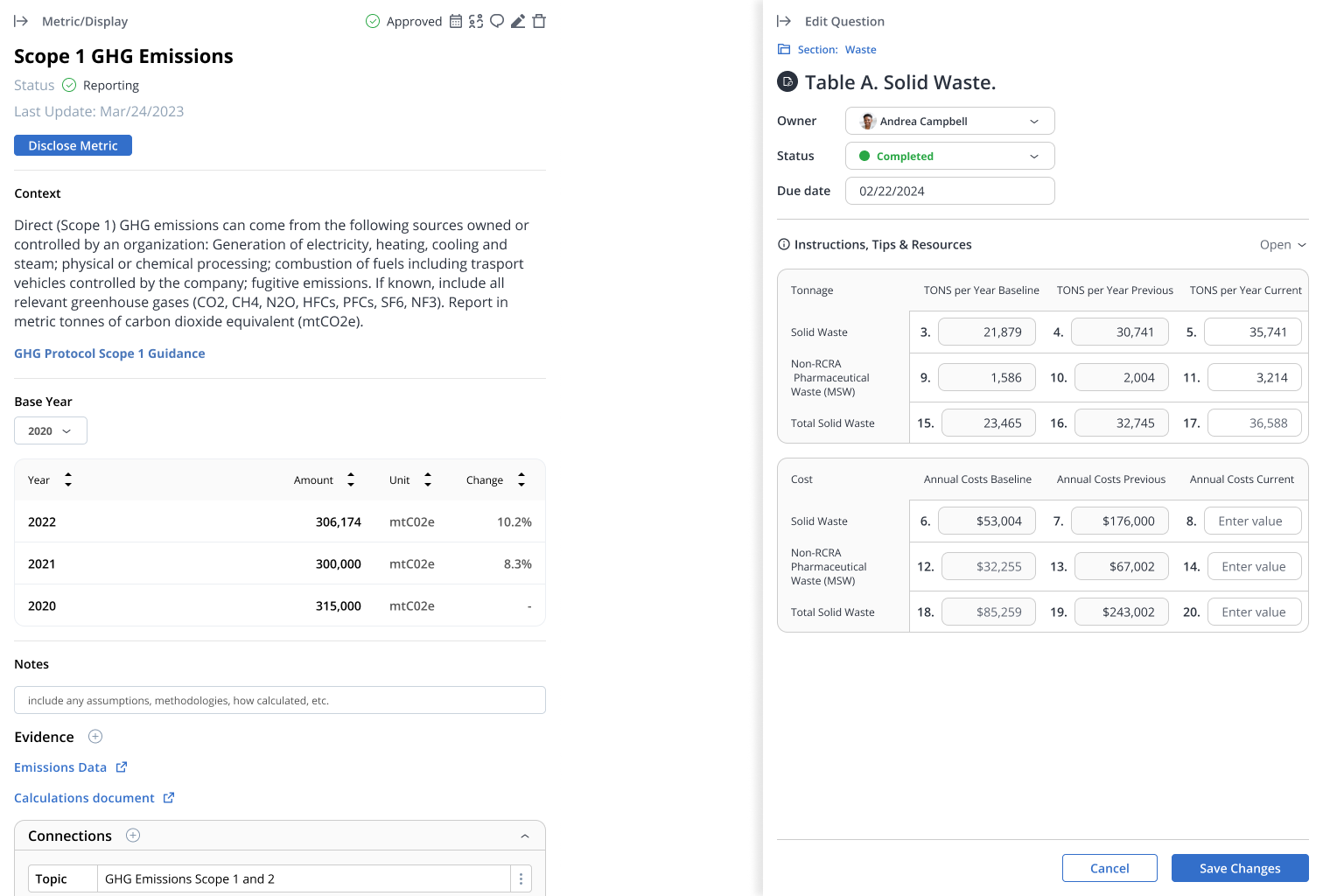
A platform where data can be recorded, managed, and utilized for decision-making as well as to easily converted into disclosures for a myriad of compliance presets for laws, regulations, treaties, independent bodies, etc.
Pain-points

Data obscurity
Data for multiple aspects of a hospital, facilities and sub-facilities (e.g., water usage, energy usage, polluting health consumables, like inhalers, etc.) Is dispersed among a large set of stakeholders, often a single person behind various layers of dependencies.
Difficulty to record and gather data
Data owners can lack the methods to record data, are overwhelmed with other responsibilities (such as doctors, department heads, or facility managers), or the current processes are very convoluted and have multiple layers of complexity and back and forth between multiple dependencies.
Data is not in a cental place
When handling dozens of facilities across multiple hospitals in a single region is easy for processes to differ and information be store in a local system or be lost completely.
Decision makers do not have tools to leverage data
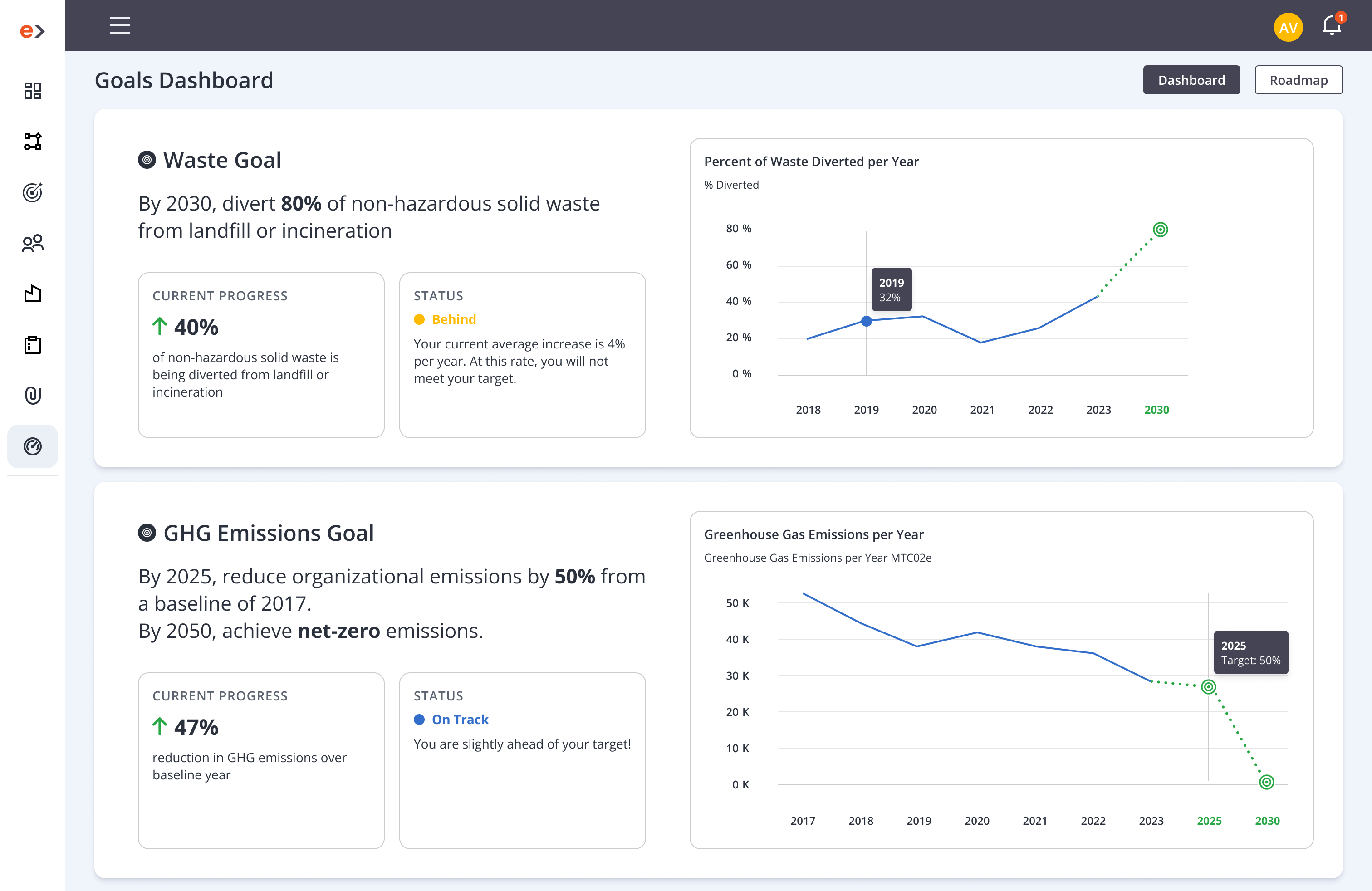
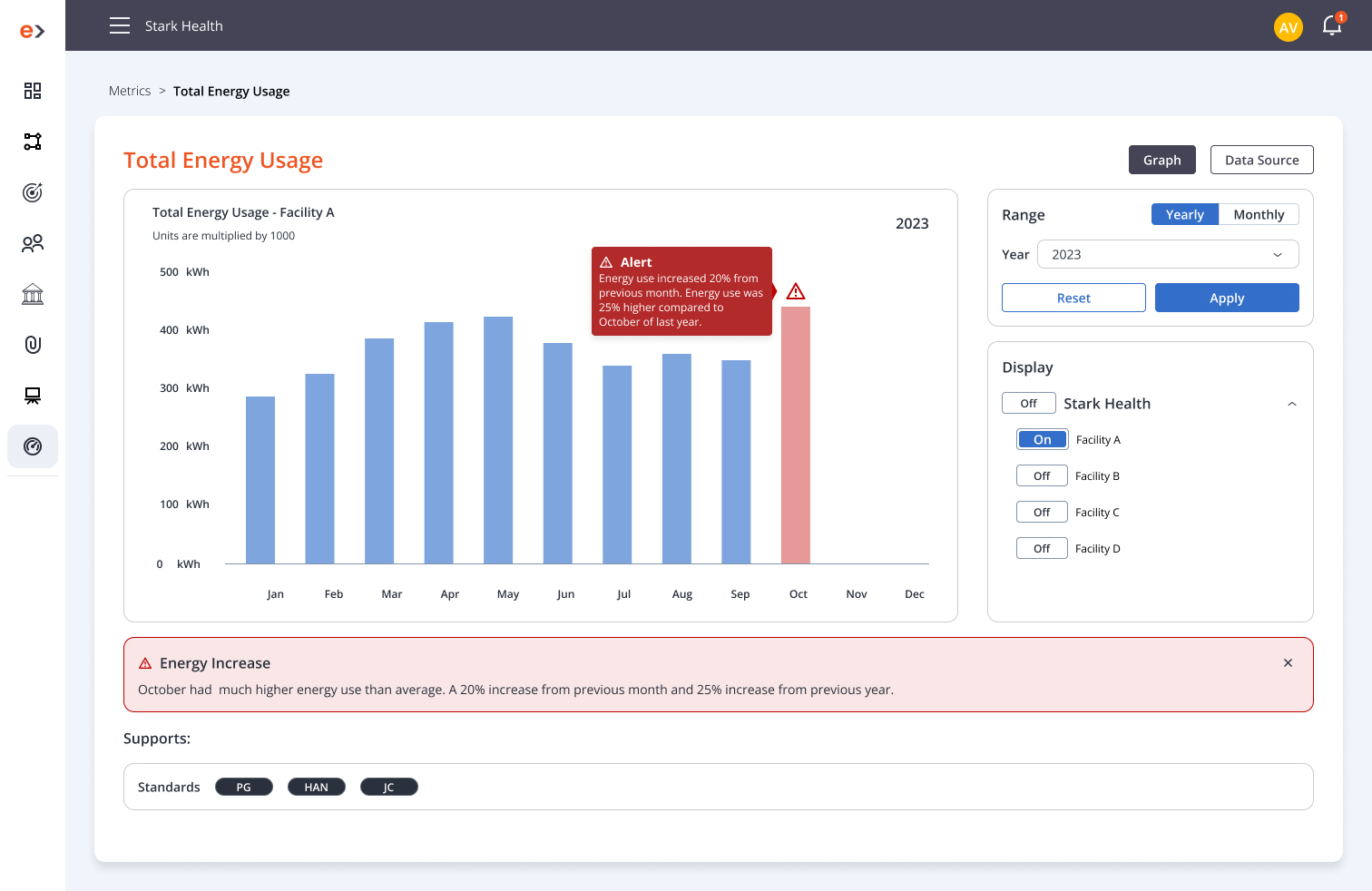
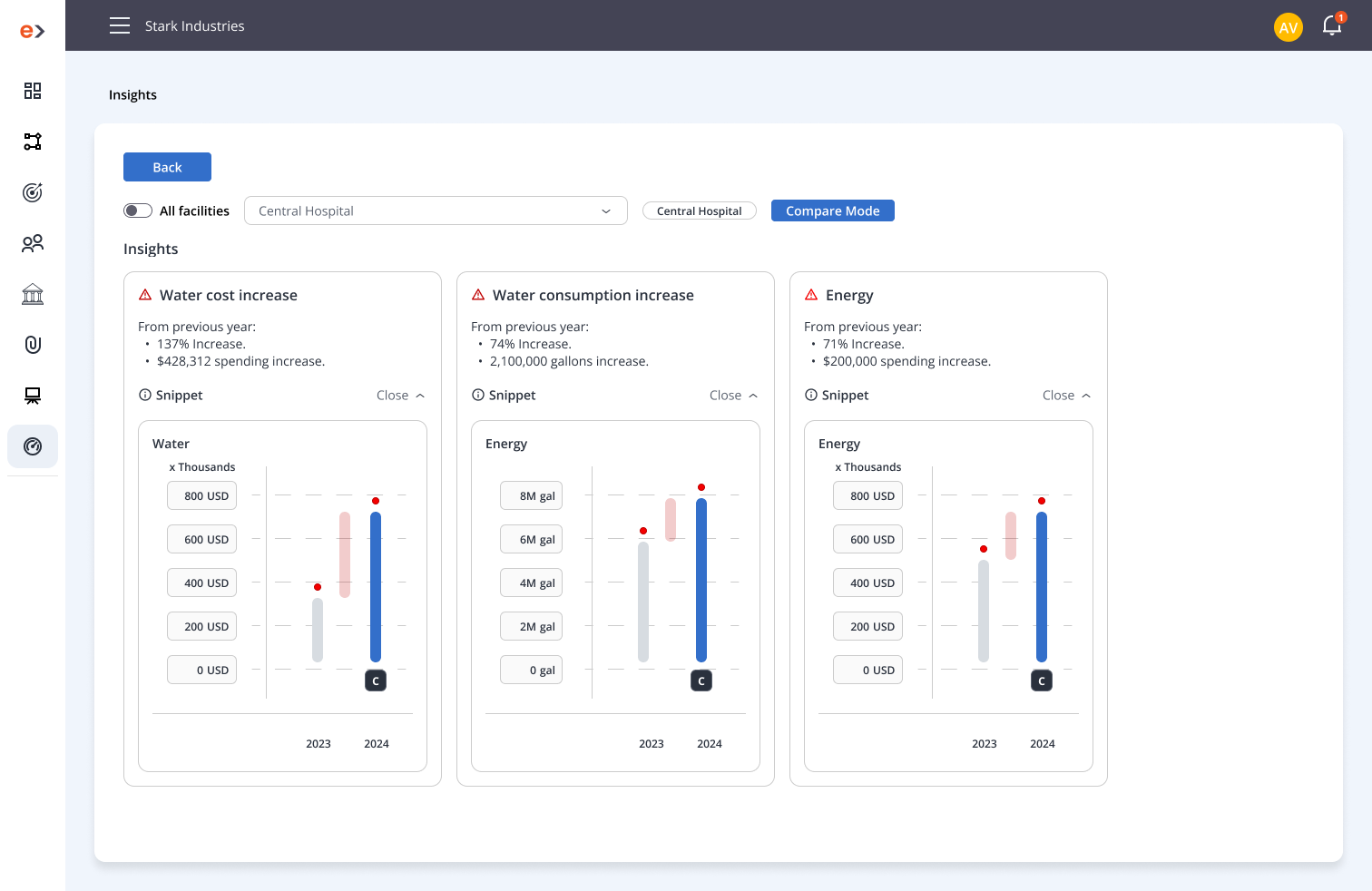
Managers, directors and boards don't have a way to visualize their operations fully and thus slow decisions or dismiss the worthwhile choices due to a absence of justification.
Compliance is very manual
A lot of forms are done by hand contacting 1 by 1 each owner multiple times in a very short amount of time.
Time and resource restrictions
Due to the high cost of energy and personal alongside small teams and difficult systems, reporting becomes prone to errors, large approximations that can cost fines, rework, and bad business decisions.
Personas
Decision makers
Board members, hospital directors, department heads and facility managers.
Data owners and facility stakeholders
Facility managers, area leaders and owners (general personnel).
3rd party vendors
Account managers, admin personnel.
Timeline
Problem definition
Conducted a series of workshops at different levels to understand data flows, process issues, disclosures, and reporting time frames. After the validation loops GDPR was selected alongside a couple of environmental sets of reporting frameworks for the foundation of the MVP, as features grew so did the frameworks available.
User research
As with the problem definition, workshops and interviews were conducted to understand the issues faced by managers, leaders, personnel, doctors, directors, and reporting bodies.
Design Iteration
Validation and feedback loops were built into the process. Prototypes and quick pilots were built to identify early problems, usability issues, and opportunities. The development process included a go/no-go decision to better use the team's resources. A design system and library were constructed in parallel.
Delivery
Design blueprints, functionality documentation, assets, and component instructions were delivered to the team. Alongside this, I polished components and ensured quality and proper functionality.
Continuous improvement
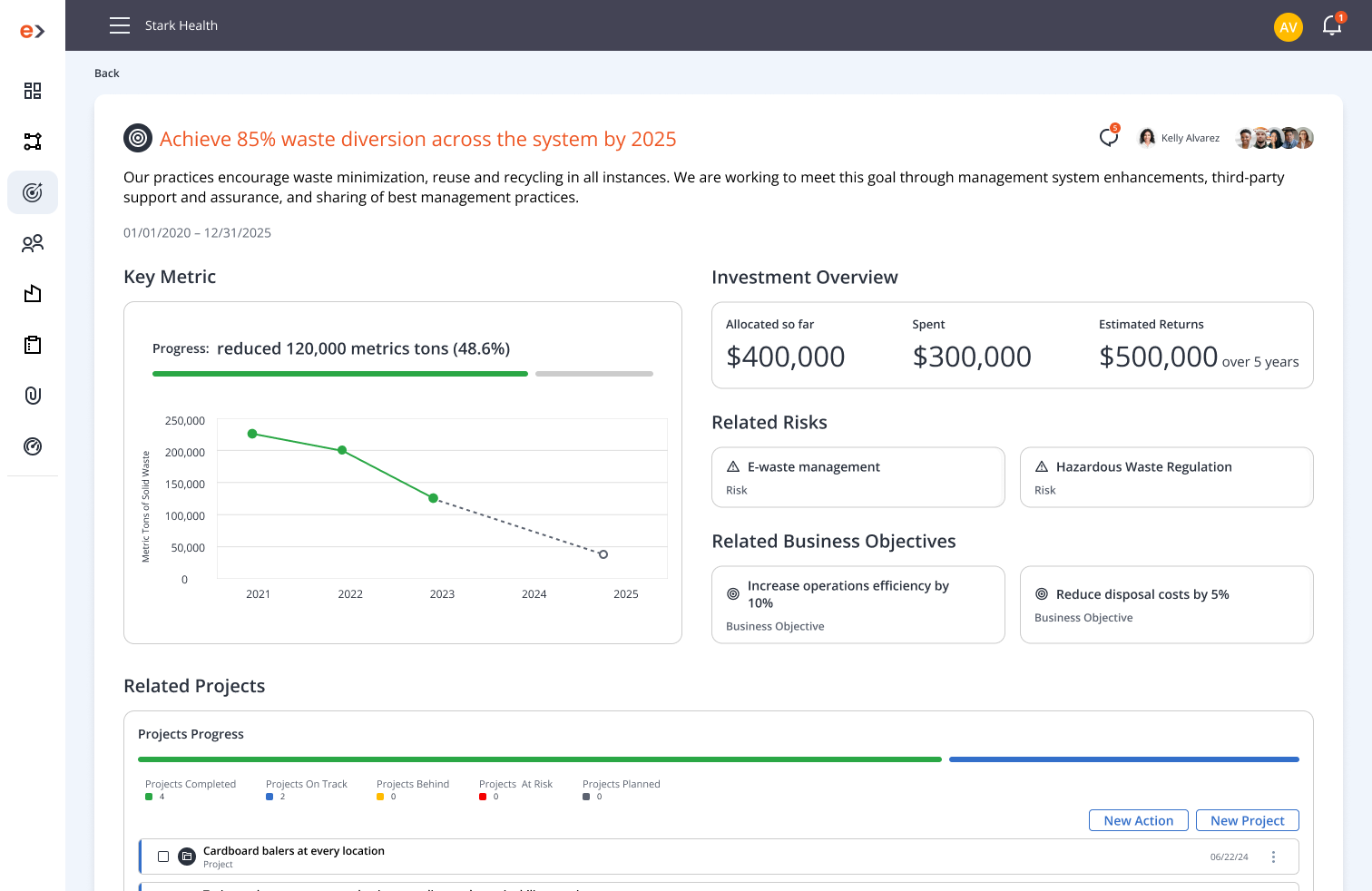
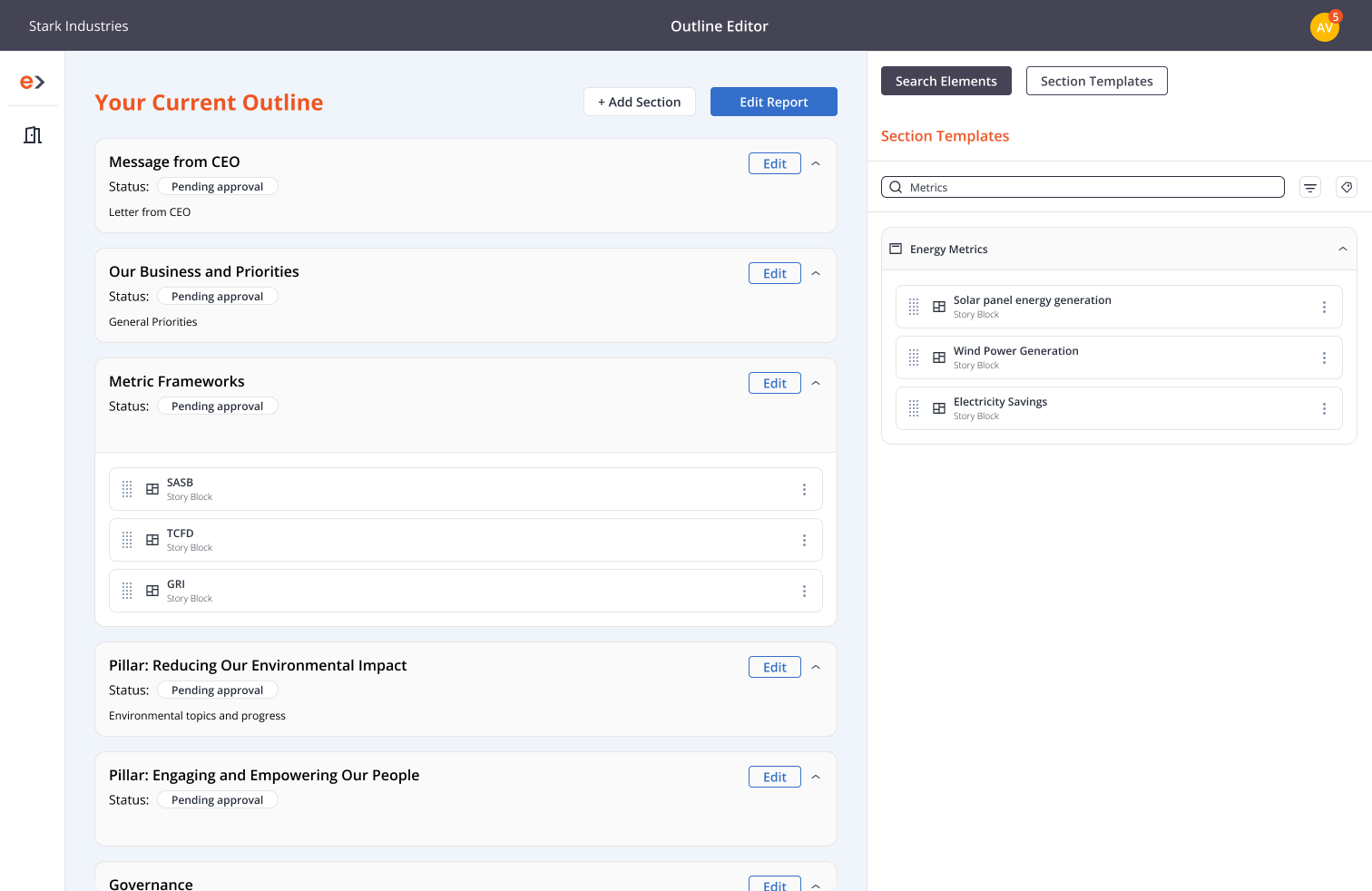
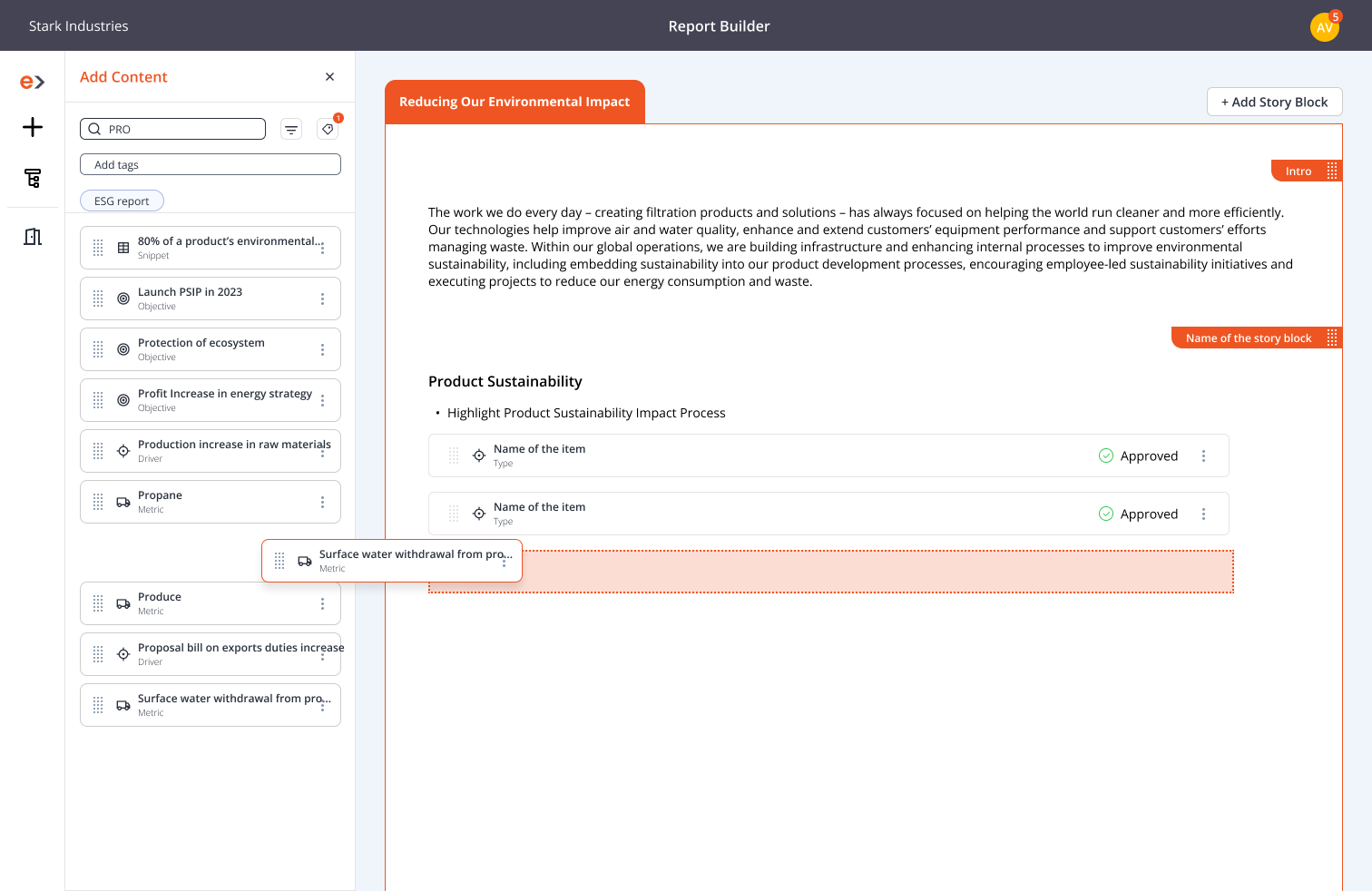
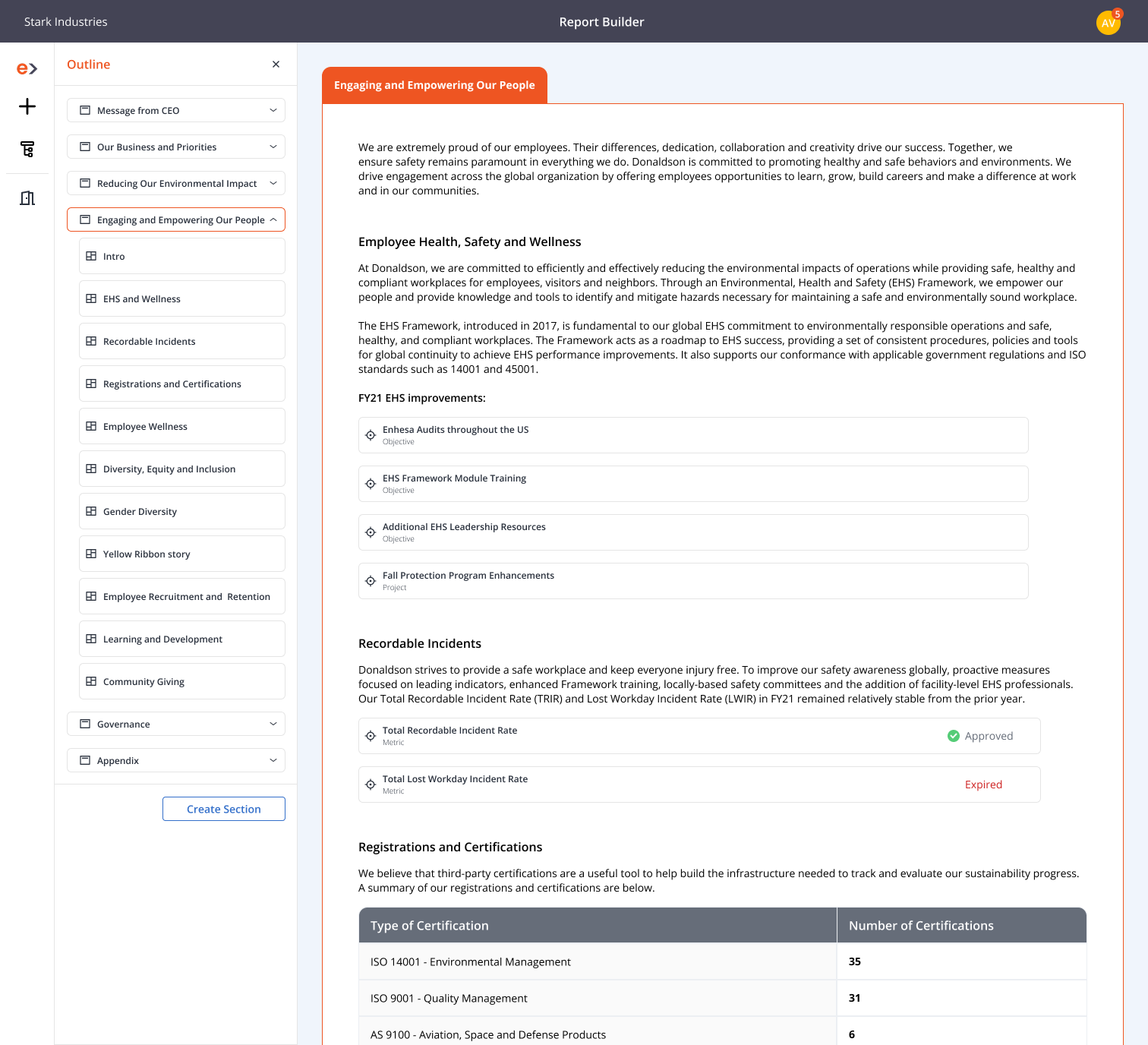
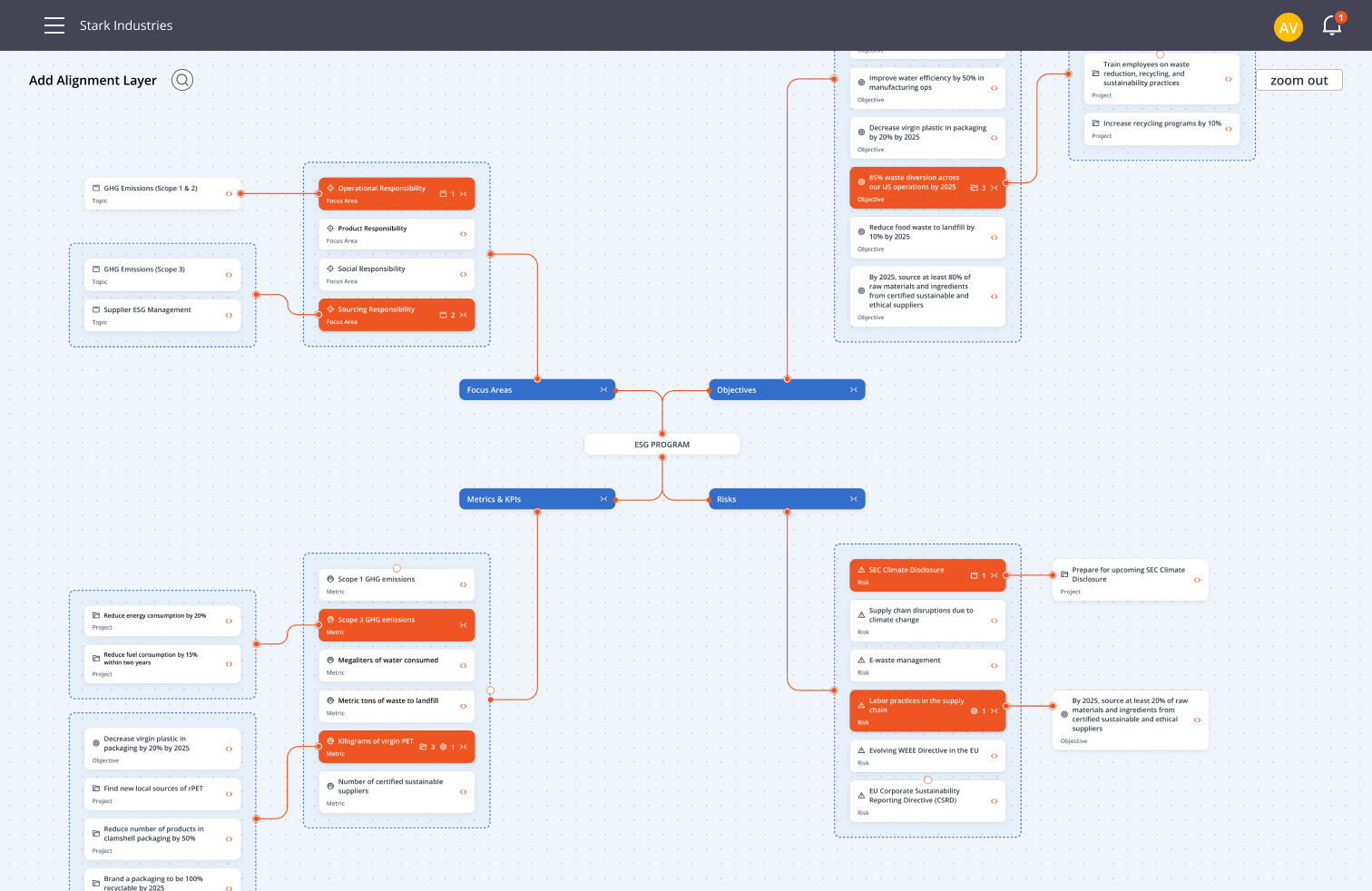
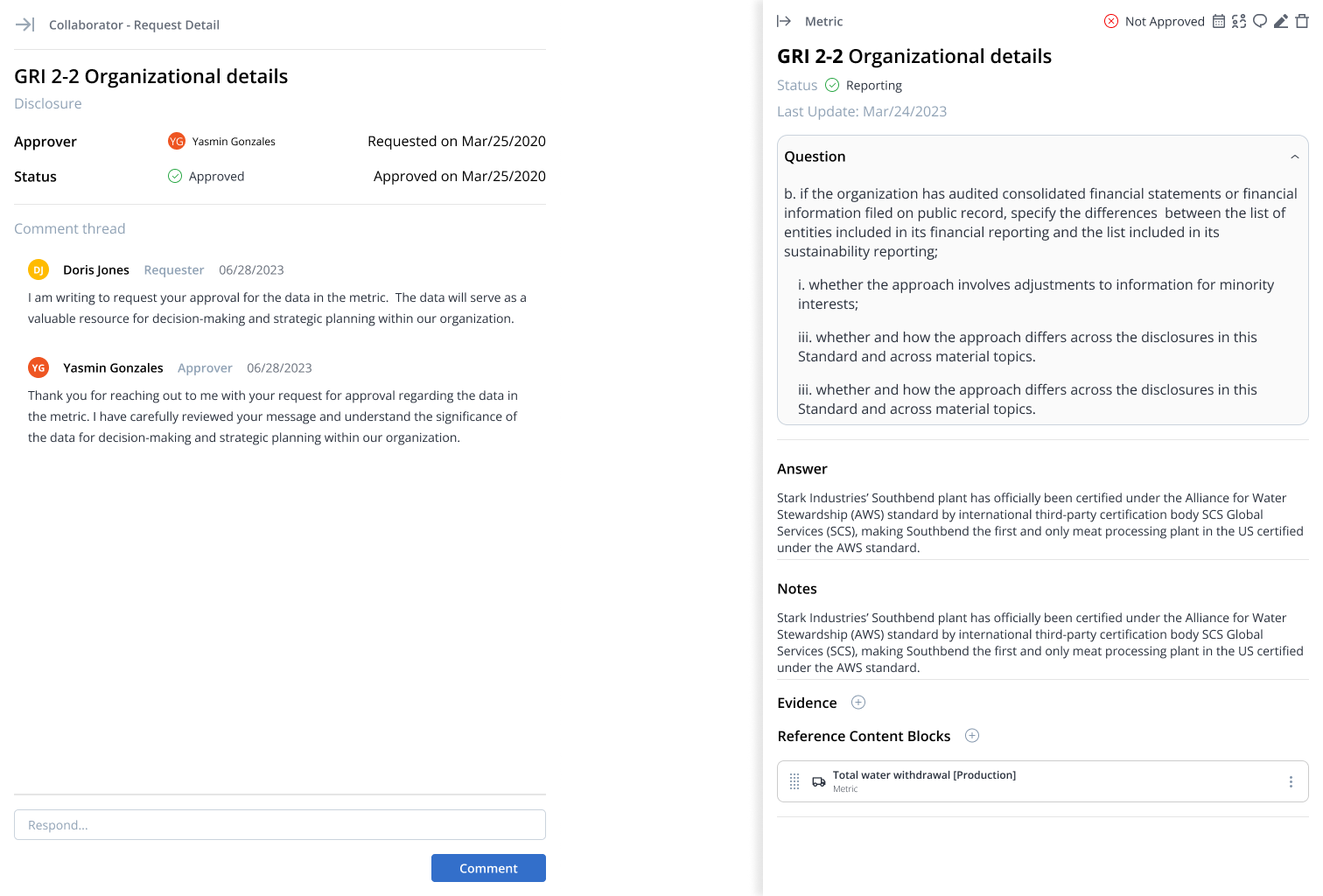
The first stage of the product was focused in reporting and centralizing data. Various iterations were done to add full profile information, collaboration and user levels, reporting outlining and auto-completion for disclosures, Custom data visualization dashboard, stakeholder management tools, canvas view of programs and facilities, third-party vendor profiles, transparency tools, custom and automated reports, and mini-sites to share portal access with third-party vendors.
Challenges
A platform tackling very complex supply chains, organization structures, laws, and regulations was bound to find lots of of challenges.
Complex workflows and personas with small differences in setting per facility.
A small team with five core team members.
Constant changes and political dependencies.
Overwhelmed users with little time to spare.
Highly regulated industry with complex guidelines on data storage and use.
Time-frame for reporting and data collection are very short.
High knowledge barriers for every framework.
Dependencies on the organizations' collaboration.