AI recruitment and
onboarding platform
About
Recruitment, onboarding, and candidate aid platform: social benefit and company maturity mission.
The platform has two sides: streamlining recruitment and onboarding for businesses in LATAM seeking blue-collar workers, and increasing reach to blue-collar workers, strengthening their profiles, and providing resources to support candidates and communities.
Pain points

Paper and pen
Many businesses of all sizes still use archaic systems, with disjointed teams and files. In some cases, this includes handwritten documentation.
High cost and difficulty to reach workers
Small pools of workers through conventional channels, as the search extends, costs increase, and variables stack.
Documentation handling and verification
Candidates lack multiple documents for onboarding, and verifying through multiple avenues becomes expensive and complex.
Dependency on multiple third party systems and vendors
Need to verify through multiple Institutions, banks, clinics, tests, and general background checks per candidate.
Workers lack knowledge, access to tech, and various resources.
Access to devices, internet, transportation, community, and government centers is unreliable. A lack of understanding of tools, channels, or processes is very common.
Lack of trust and familiarity
The existing methods are very foreign, and in a low-trust environment, it is hard to convince candidates to try them.
Mismatch of channels for job search
Businesses are looking in the wrong places, while workers are looking in more community-based spaces.
Personas
Businesses
HR managers, HR agents, recruiters (Internal and external), and business owners/directors
Workers
Blue-collar workers, students (lower degree).
Community
Community ambassadors or representatives, collectives, work organizations, commerce organizations, local to international institutions, government programs.
Timeline
Environment understanding
Because of the dual-purpose mission, a deep dive with an anthropological team and community leaders was necessary, as social, cultural, and political obstacles may coexist with product and market challenges.
Problem definition
High recruitment costs, disorganized processes, overwhelmed teams with manual tasks, various vendors, and an inability to reach large pools of qualified workers.
On the workers' side, there is a lack of resources, paths to reach relevant jobs, and little knowledge of ways to meet requirements.
User research
A series of loops of workshop hypotheses were then validated with both user groups; rough prototypes were created, validated with the market and with social parameters, and repeated until an MVP was defined.
Multiple issues required a deeper dive, such as language and cultural differences in the regions selected for pilots.
Design Iteration
Validation with blue-collar workers, businesses, and recruiters was a core focus. Multiple loops of: design ->testing/validate -> refine/re-prioritize.
Delivery
Parallel interfaces to a recruitment platform:
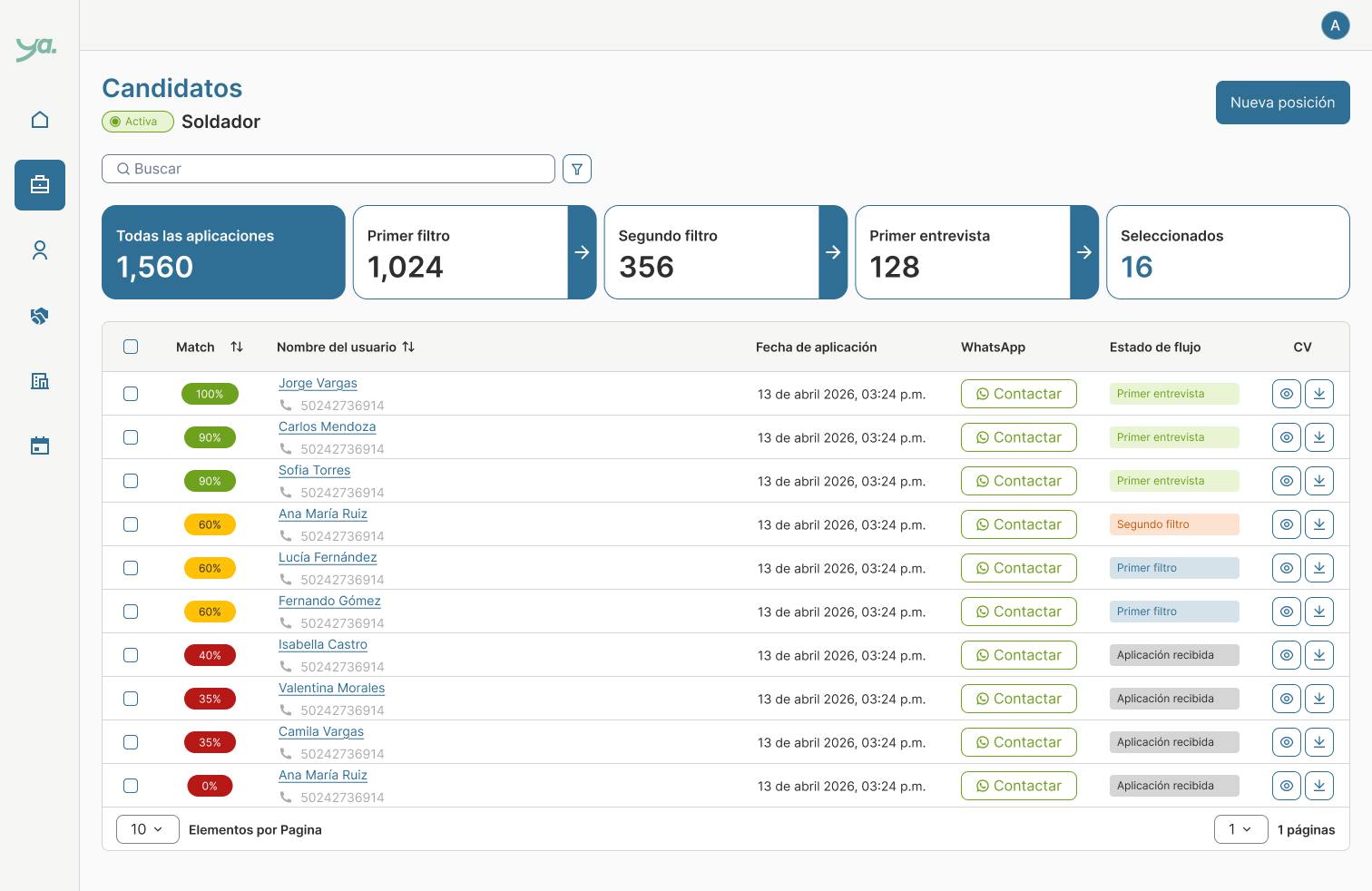
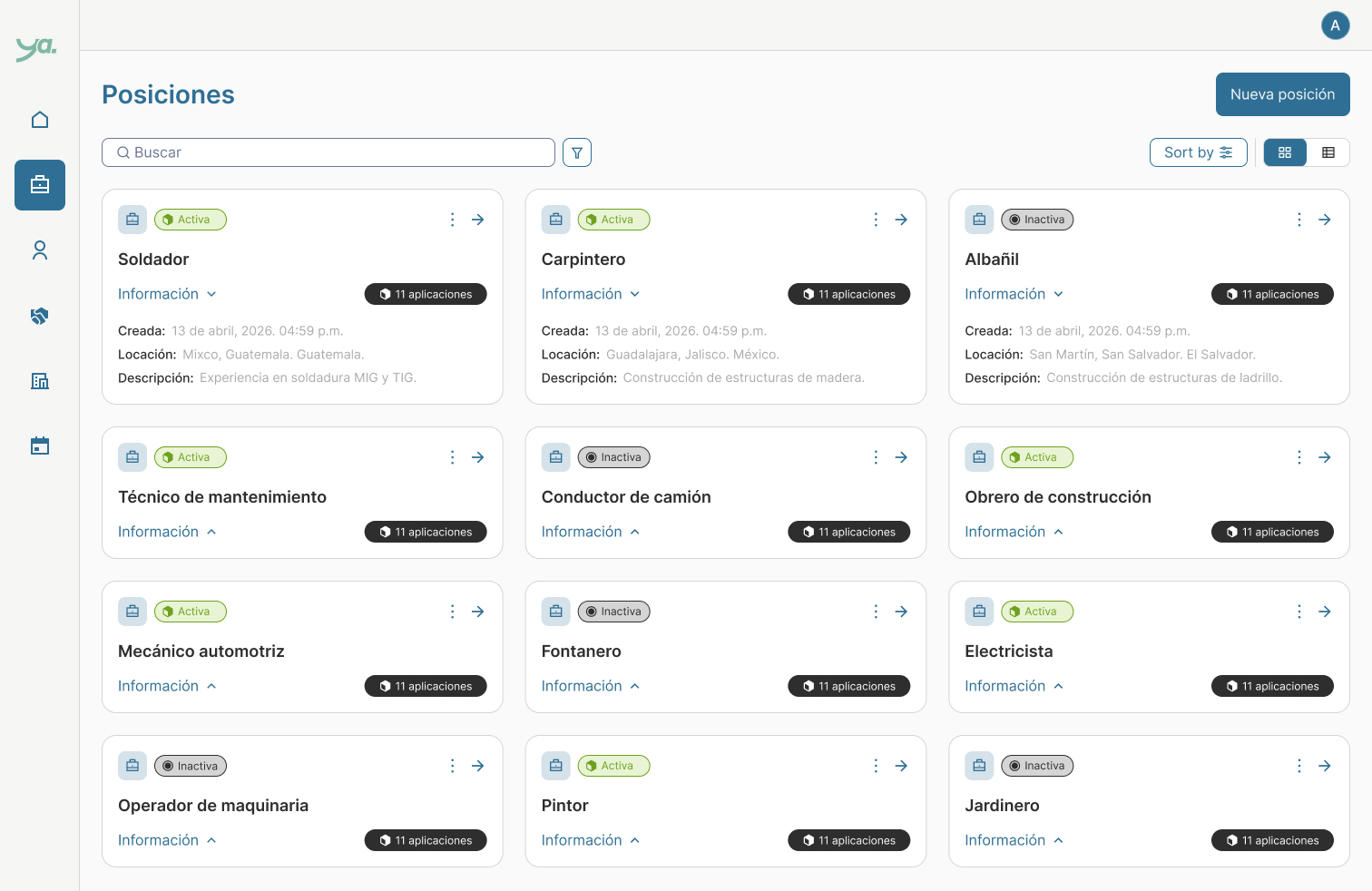
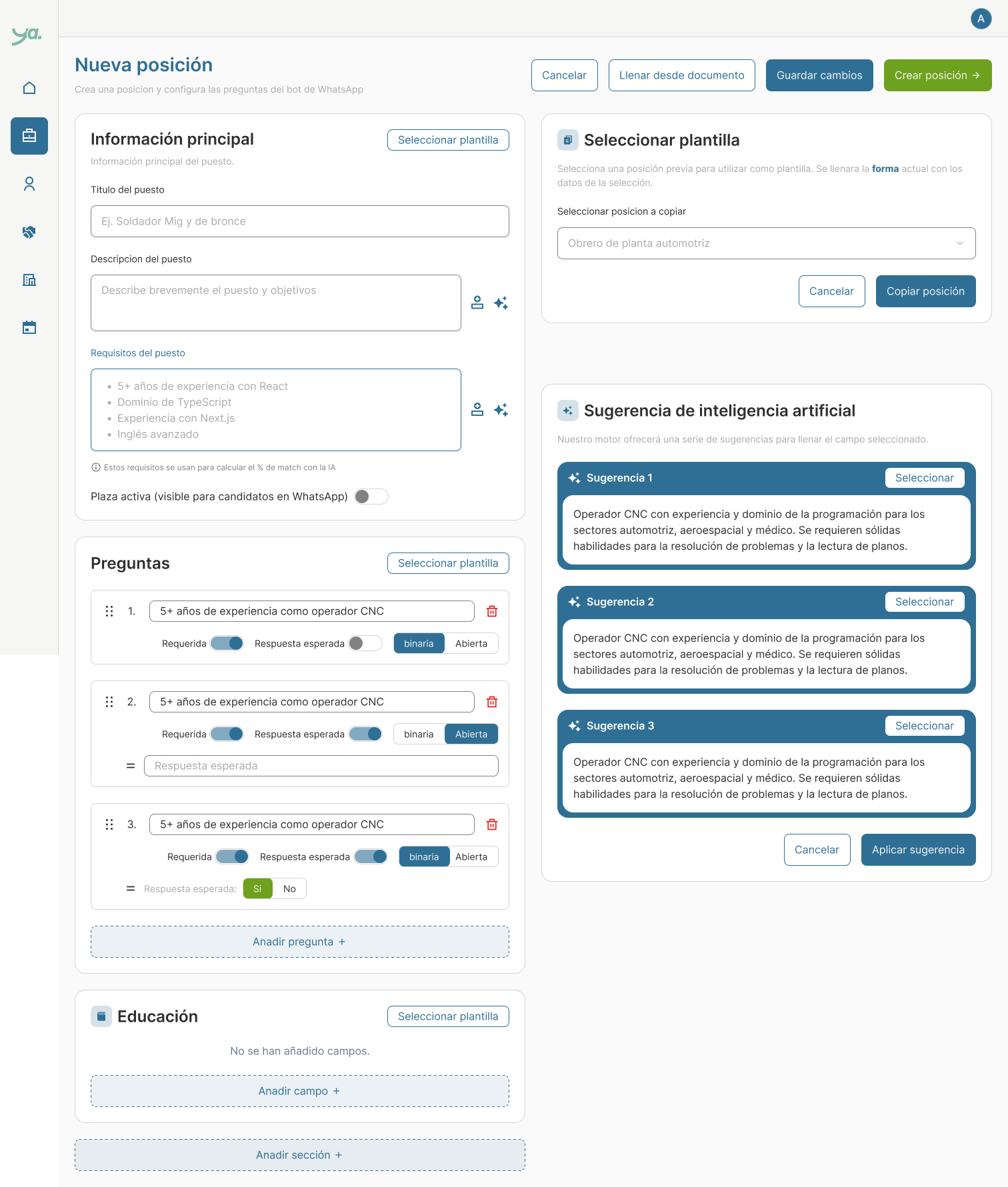
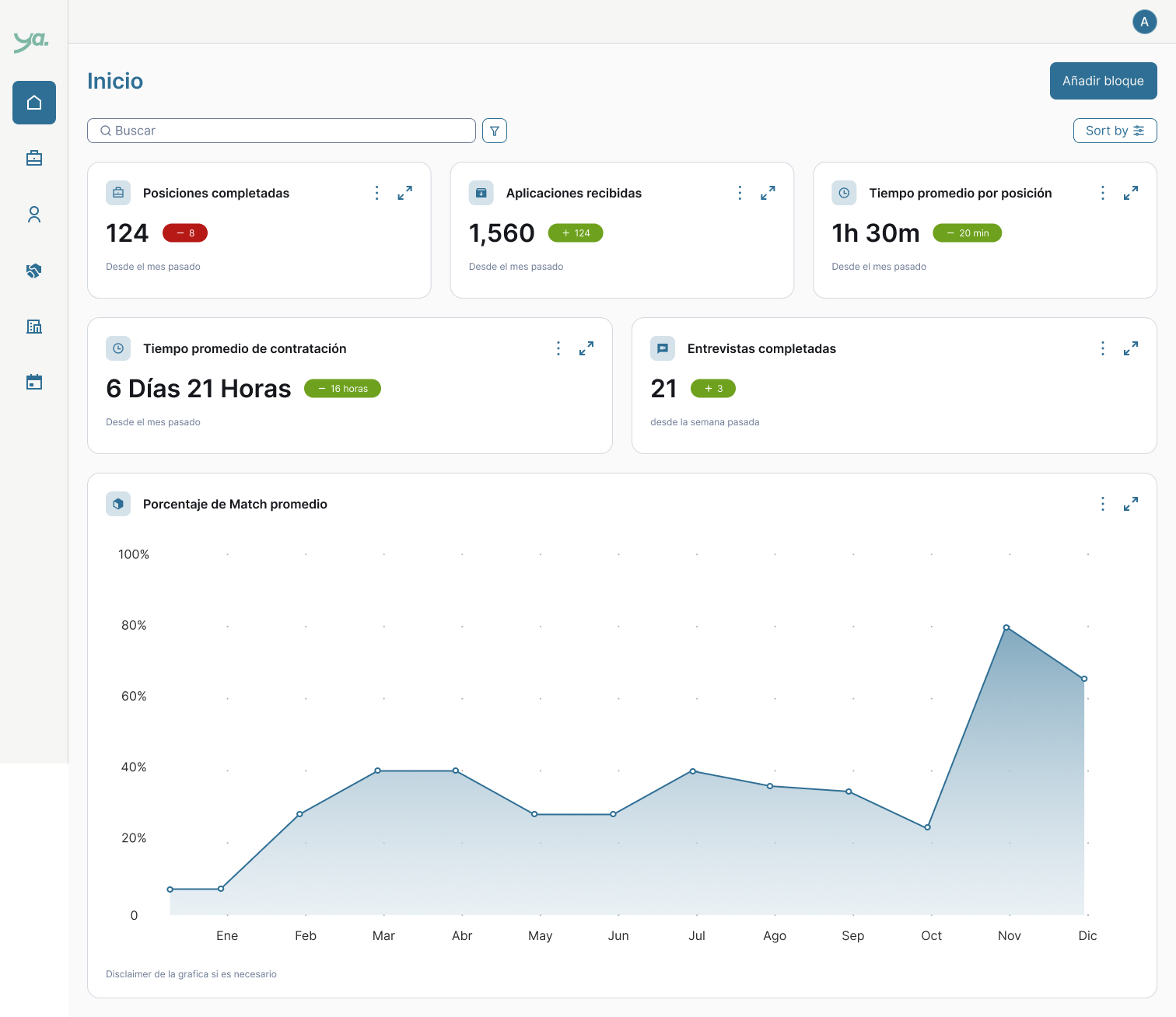
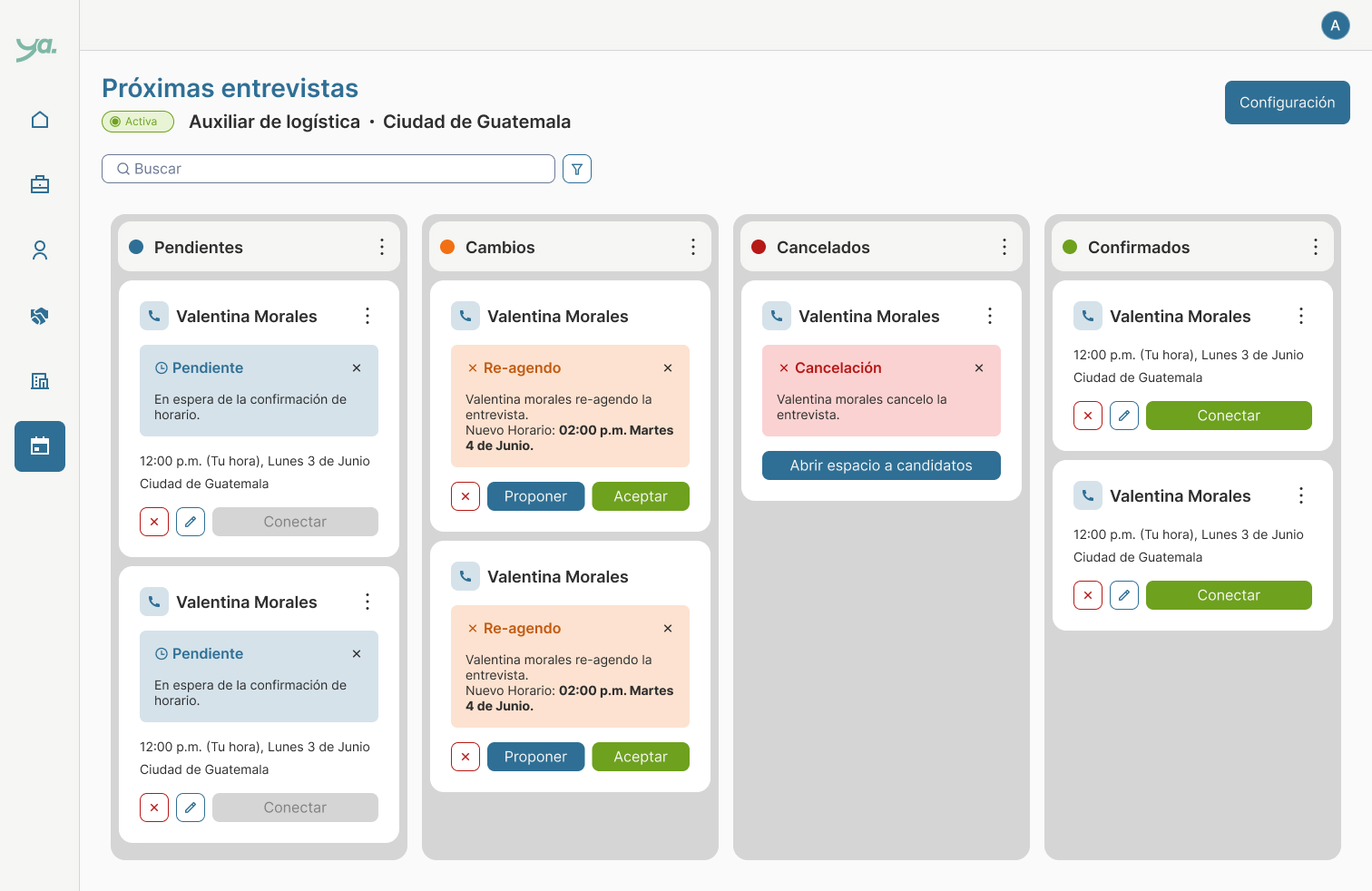
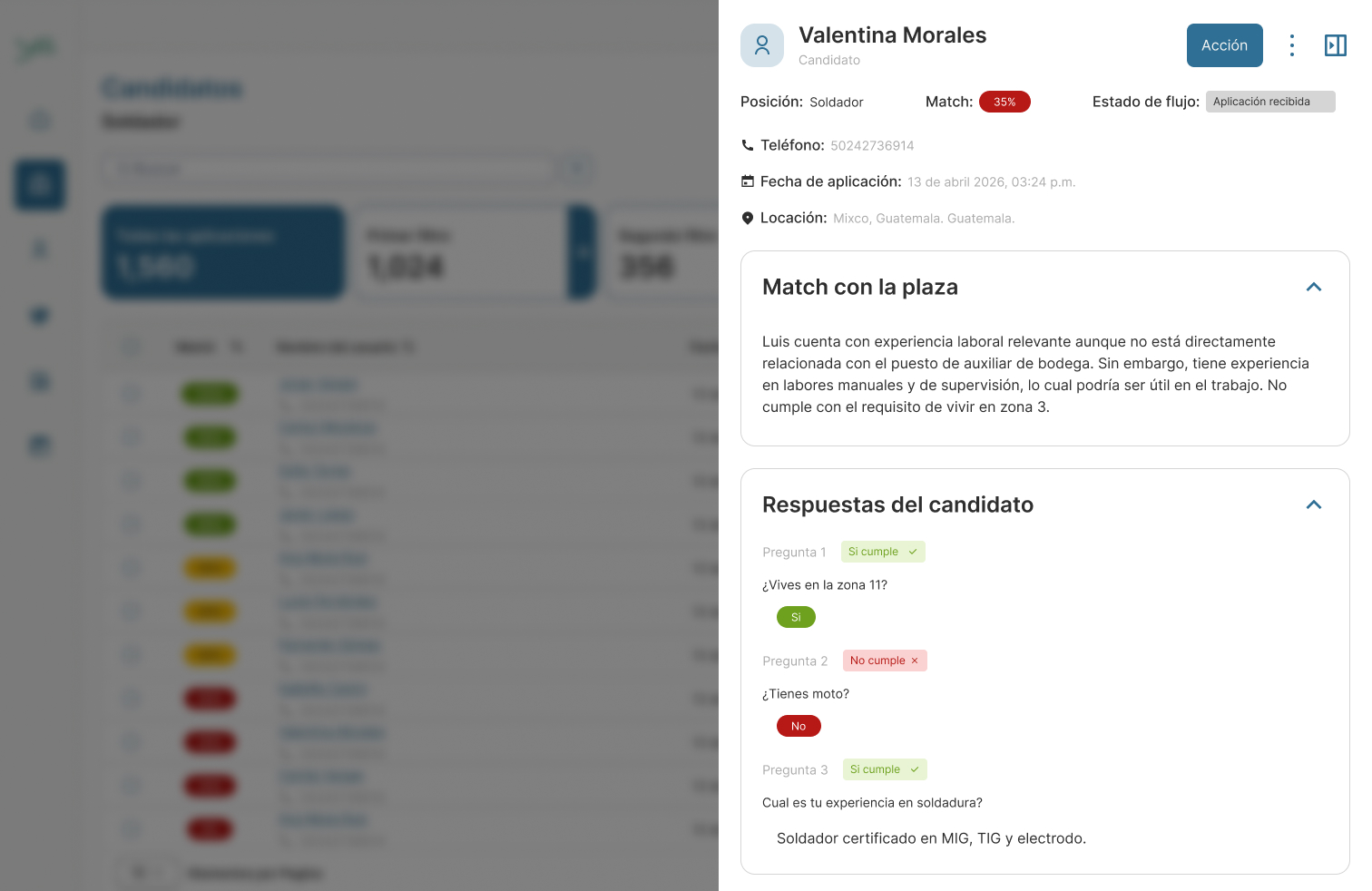
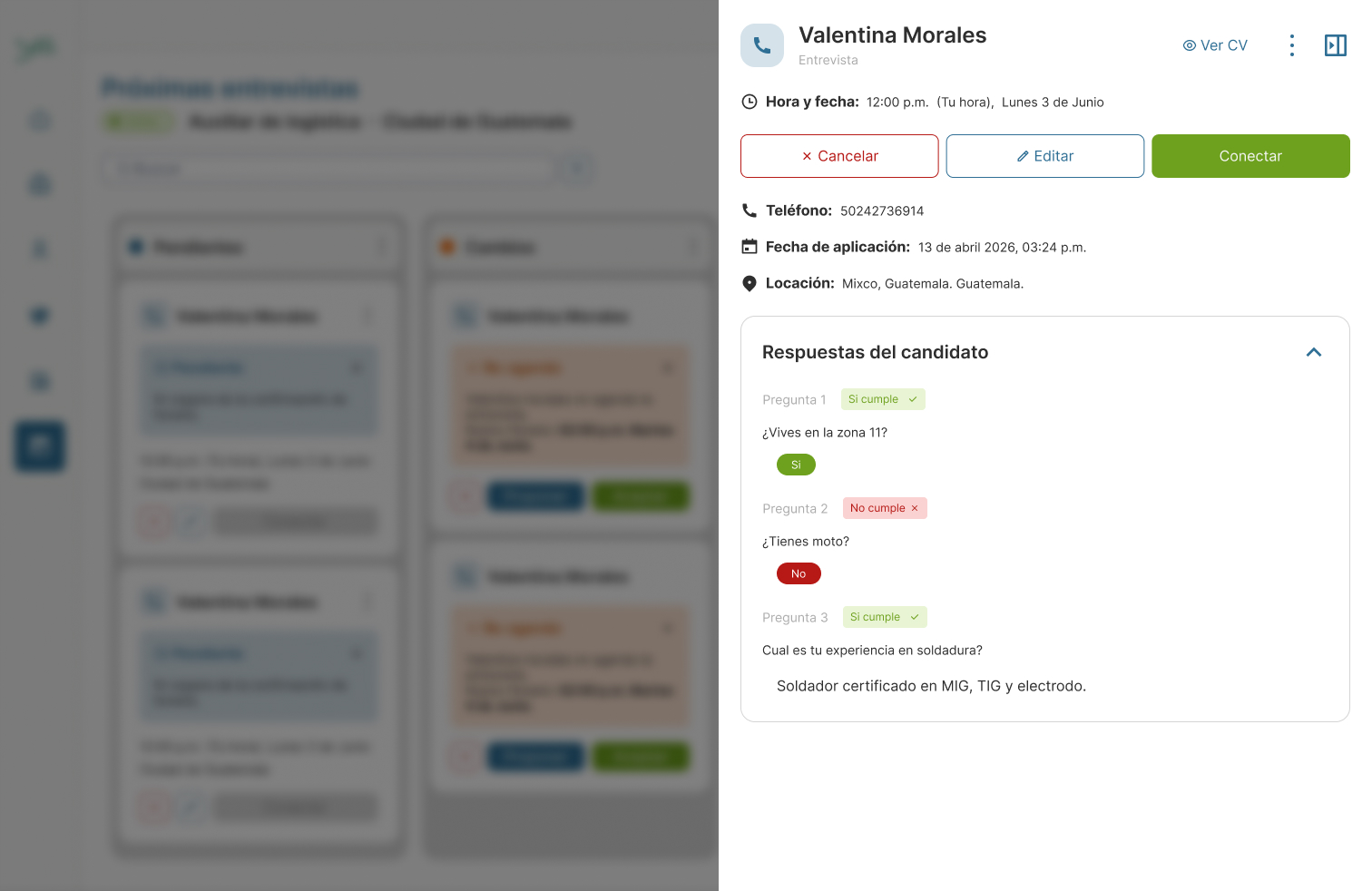
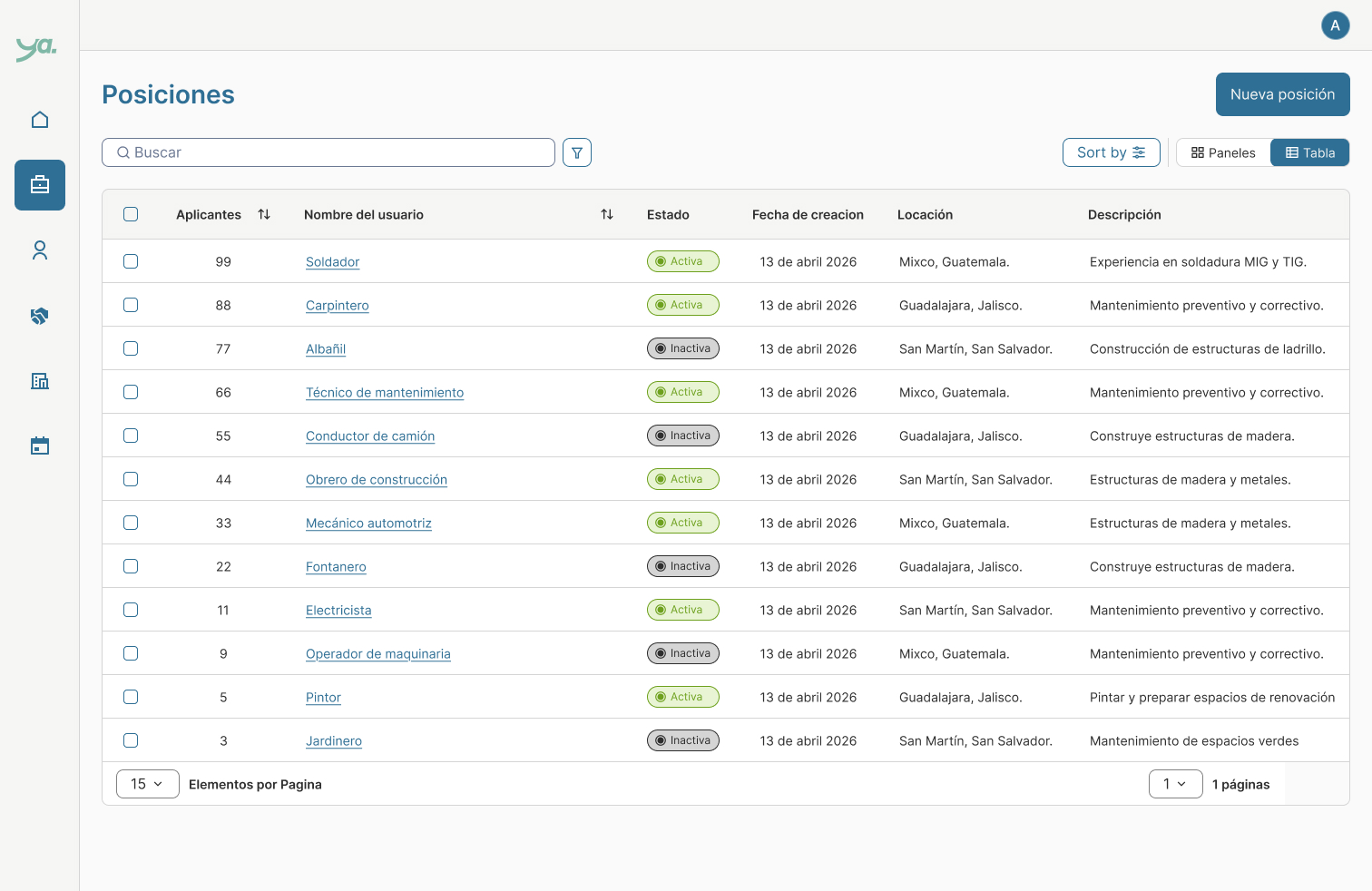
For recruiters, an interface to manage their work, teams, and candidates, and an AI engine to help with the workload.
For workers, a familiar interface they can access through an AI companion in channels they know and feel comfortable with.
Alongside the UI and design system, I created brand assets, guidelines, marketing graphics, and company materials to support multiple efforts and maintain consistency.
Continuous improvement
After the first MVP, we ran pilots, identified, validated, and reprioritized additional pain points, then launched a series of new MVPs that polished the product and expanded features, specifically fine-tuning the AI engines (worker and recruiter).
Challenges
There were multiple issues and challenges through out the effort:
Cultural differences across regions and nations.
High variation in business and policy maturity.
Standards for documents were difficult to apply due to a very diverse set of documentation quality.
Adapting language to local idioms and complexity for different regions and countries (despite most being in Spanish).
Balancing AI assistance with customization to the business processes.
Correctly defining social impact goals and parameters, as well as what constitutes success.
Balancing the market weight of a high social-impact purpose and building a moat around it.